Clock in at LOSS. Begin with a small prediction and help Latent Optimization & Semantic Systems build an increasingly automated future. Your work matters.



Shortly after Uber COO Andrew Macdonald said that it was “getting harder to justify” spending money on AI as it was “very hard to draw a line” from that spend to useful consumer features (after its CTO said Uber burned its entire annual token budget in four months), Axios’ Madison Mills reported that one company had accidentally spent $500 million in the space of a month on Anthropic’s models after failing to set spend limits. A few days later, Mills would report that other companies were now looking for ways to reduce their AI spend.
Why would we program AI that wants to harm us? Because we might not know how to do otherwise.

It's fine that people talk to chatbots, but they shouldn't expect me to listen to theirs.
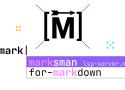
Write Markdown with code assist and intelligence in the comfort of your favourite editor. - artempyanykh/marksman

The GNOME project has updated its review guidelines to reject GNOME Shell extensions that contain code generated by large language models, after reviewers saw a surge of submissions that appeared to be produced by AI tools. The new rule states that while developers may still use AI for learning or lightweight assistance such as code completion, they must fully understand and be able to explain the code they submit. Reviewers will now treat signs like oversized, unnecessary logic, mismatched coding styles, fabricated APIs, or leftover prompt comments as indicators that an extension was produced by an automated system and should be rejected. GNOME maintainers frame the change as a way to keep the extensions ecosystem safe, maintainable, and welcoming to responsible contributors rather than a blanket rejection of AI as a development aid.
As with any extraordinarily powerful tool, LLM use has both promise and peril — and that they are so general-purpose leaves real questions about how and when they should be used.
It's a matter of how.